
I want to tell you about a woman named Martha. Martha came to us from a quiet suburb in New York. She was sixty-eight years old, she had a slightly troublesome left knee, and she had never slept in a tent in her entire life. When she first emailed me, her question was simple and heartbreaking. She asked, “Emmanuel, am I too old and too ordinary for this?”
She had seen the photos of people in heavy gear, looking like they were preparing to climb Mount Everest. She had heard stories of grueling eight-hour hikes through “impenetrable” forests. She was convinced that gorilla trekking was a sport reserved for the young, the elite, and the exceptionally fit.
I told her what I will tell you today. Gorilla trekking for beginners is not about your athletic ability. It is about your heart. It is about the willingness to step into a different world for a few hours. You do not have to be an adventurer. You just have to show up.
The Myth of the “Elite” Trekker
There is a common misconception that you need to be in peak physical condition to see the mountain gorillas of Uganda or Rwanda. While it is true that you will be hiking in a rainforest, this is not an Olympic event.
The beauty of the trekking system is that it is designed to be inclusive. Every morning, before the treks begin, the park rangers gather to discuss the visitors. They look at ages, they ask about fitness levels, and they listen to your concerns. They then group people based on their physical ability.
If you have a troublesome knee like Martha, the rangers will assign you to a gorilla family that is known to stay closer to the park boundaries. Some families prefer the lower slopes, and the walk to find them might only take forty-five minutes on relatively flat ground. We call these the “easy” treks, and they are perfect for those who are just starting their adventure journey.
Your Secret Weapon: The Porter Service
If there is one thing I wish every beginner knew, it is the value of a porter. In Uganda, we often call them our “unsung heroes.” For a small fee, usually between twenty and twenty-five dollars, you can hire a local person from the nearby village to accompany you on your trek.
A porter does much more than just carry your backpack. They are your physical and emotional support. They will offer you a hand when the trail gets slippery. They will give you a gentle push when you are climbing a steep section. Most importantly, by hiring a porter, you are directly supporting a local family. Many of our porters are using this income to pay for their children’s school fees or to start small businesses.
Martha was hesitant at first. She felt she should be able to carry her own bag. But by the end of the first hour, her porter, a young man named David, had become her best friend. He knew exactly where to place his feet, and he made sure Martha felt steady and safe every step of the way.
The “African Helicopter”: Accessibility for Everyone
I want to speak for a moment to those who truly believe they cannot walk at all. Perhaps you have a significant mobility challenge or a permanent injury. Does that mean you are excluded from seeing the gorillas?
Absolutely not. We have a service that we affectionately call the “African Helicopter.” It is a specialized sedan chair or a comfortable stretcher carried by a team of eight to twelve strong local men. They will carry you all the way into the forest to the gorillas and all the way back out.
It is a humble and beautiful experience. It ensures that the wonder of the forest is available to everyone, regardless of their physical limitations. We have seen people in their eighties and people with physical disabilities use this service to achieve their lifelong dreams. It is proof that where there is a will, we will find a way.
Essential Gear for the First-Timer
When you are preparing for gorilla trekking for beginners, your gear should be practical, not fashionable. You don’t need the most expensive brands. You just need things that work.
First, you need a pair of sturdy, waterproof hiking boots. Make sure you wear them at home for at least a few weeks before you arrive. You do not want to find out that your boots give you blisters when you are halfway up a mountain in Bwindi.
Second, think about protection. The forest is full of stinging nettles and sharp branches. You want long-sleeved shirts and long trousers. Many people also find that a pair of simple gardening gloves is incredibly helpful. When you are reaching out to grab a branch for balance, those gloves will protect your hands from thorns.
Finally, bring a lightweight rain poncho. This is a rainforest, after all. The weather can change in a heartbeat, and staying dry is the key to staying comfortable. You can see a more detailed list of what to pack on our Destinations page, where we break down the climate and conditions for each park.
What to Expect on the Morning of Your Trek
The day begins with a sense of quiet anticipation. You will gather at the park headquarters for a briefing. The rangers will explain the rules of the forest. They will teach you how to behave when you are with the gorillas. They will tell you to keep a distance of ten meters and to keep your voice low.
This briefing is a great time to be honest about how you are feeling. If you are tired, or if you are worried about the terrain, tell your guide. We are here to make sure you have a successful experience, and the more we know, the better we can help you.
Once the briefing is finished, you will head out with your guide, your rangers, and your porters. The forest is a sensory experience. You will hear the calls of exotic birds and the rustle of monkeys in the canopy. Your guide will point out medicinal plants and tell you stories of the forest’s history. It is a slow, steady journey. We do not rush. We take breaks. We drink water. We enjoy the air.
The Moment of Connection
All the preparation and all the walking lead to one single moment. Your trackers will signal for you to stop. They will tell you to leave your walking sticks and your bags behind. You will move forward quietly, and suddenly, there they are.
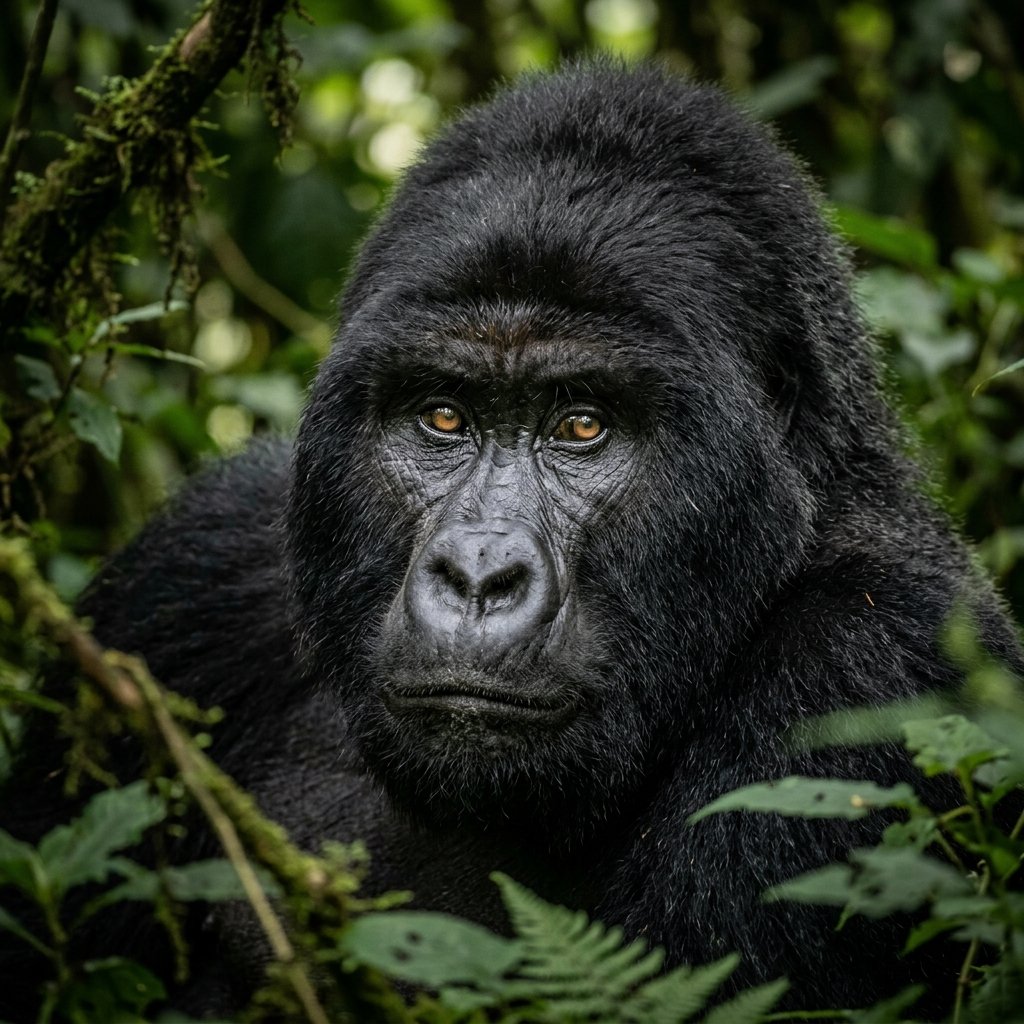
Seeing a mountain gorilla in the wild is not like seeing an animal in a zoo. There are no bars. There is no glass. There is just the deep, ancient connection between two living beings. You will see the youngsters playing and tumbling. You will see the mothers grooming their infants. And you will see the Silverback, the patriarch, watching over his family with a calm and powerful presence.
In that hour, all your fears about your fitness or your age will vanish. You will realize that you belong in this moment. You will find that you have more strength than you ever imagined.
Preparing Your Body and Mind
While you don’t need to be an athlete, a little bit of preparation goes a long way. In the weeks before your trip, try to take some longer walks in your neighborhood. If there are hills nearby, walk up and down them. This will help your lungs and your legs get used to the movement.
But the most important preparation is mental. Remind yourself that you are going on a journey of discovery, not a race. Give yourself permission to go at your own pace. The rangers and the guides are experts at managing the tempo of the group so that everyone feels comfortable.
If you are curious about which country might be a better fit for your style, our Uganda vs Rwanda guide is a great place to start. It explains the differences in terrain and logistics so you can choose the path that feels right for you.
Why We Do What We Do
At Bashem Safaris, we believe that the wild should be accessible to those who love it. We take great pride in helping “ordinary” people achieve extraordinary things. When I saw Martha return from her trek, she wasn’t just tired and happy. She was transformed. She realized that she was still adventurous, still capable, and still very much alive.
She told me that the hardest part of the trek was not the mountain. It was the moment she almost talked herself out of coming.
If you are sitting at home right now, looking at photos and wondering if you can do this, my answer is a resounding yes. We will be with you every step of the way. We will find the right gorilla family for you. We will provide the right support. We will make sure you feel like a guest, not a tourist.
Your Journey Starts with a Single Step
You don’t have to have everything figured out today. You don’t have to be a mountain climber. You just have to have the desire to see something beautiful.
If you want to talk about your specific concerns, or if you want to know more about how we handle treks for beginners, I would love to hear from you. You can find our contact details on our Contact Us page.
Don’t let the word “Impenetrable” scare you away from Bwindi. The forest is ready to welcome you, and so are we.
Are you ready to see if you are a Primate Pioneer or a Classic Adventurer?
Take the 60-Second Safari Quiz
I hope to see you in the forest soon.
Emmanuel Bashitsi
Founder, Bashem Safaris
Frequently Asked Questions
How fit do you need to be for gorilla trekking in Uganda?
You need a moderate baseline fitness — able to walk for 2 to 8 hours on uneven, hilly terrain. You do not need to be a hiker or athlete. The Uganda Wildlife Authority provides porters ($20–25) who carry your gear, steady you on steep sections, and in rare cases assist with physical transport. Many of our travelers are 55–70+ and complete the trek without difficulty.
What is a porter on a gorilla trek and how much does it cost?
A porter is a local guide hired to carry your daypack and assist you physically on the trail. Cost: $20–25 per person, paid directly to the porter at the end of the trek. Hiring a porter is strongly recommended for everyone — it supports local employment and makes the trek significantly more comfortable regardless of your fitness level.
What is the “African Helicopter” on a gorilla trek?
The “African Helicopter” is a local nickname for the stretcher-carry service available on gorilla treks. If a trekker is genuinely unable to complete a section of the trail, a team of porters will carry them on a stretcher — safely, without drama, and without embarrassment. It exists, it is used, and knowing it exists should remove any anxiety about whether you can physically complete the trek.
What should I pack for gorilla trekking?
Essentials: long-sleeved shirt and long pants (dark or neutral colors), sturdy closed-toe hiking boots with ankle support, garden gloves (protects hands on steep sections), daypack, 1.5L water, energy snacks, rain jacket (Bwindi gets sudden rain), insect repellent, and your permit. Leave perfume and cologne at the lodge — strong scents disturb the gorillas.
When is the best time to go gorilla trekking in Uganda?
The best trekking months are June–September (long dry season) and December–February (short dry season). Trails are drier and more accessible. Permits still sell out, so book 6–12 months in advance for peak months. The wet seasons (March–May, October–November) are cheaper and less crowded — the gorillas are still there, but trails are muddier.
How do I book a gorilla trekking permit through Bashem Safaris?
Contact Emmanuel directly at emmanuel@bashemsafaris.ca or through the contact form at safari.bashemsafaris.ca. Bashem Safaris handles Uganda Wildlife Authority permit procurement, lodge booking, transportation, and full itinerary design. You do not need to contact UWA yourself — we manage the entire process.
How much does gorilla trekking in Uganda cost in total?
The Uganda Wildlife Authority permit is $800 per person. A full 3-day gorilla trekking package (including transport from Entebbe, accommodation, park fees, ranger fees, and guide) typically runs $1,500–$2,500 per person depending on accommodation tier. International flights are separate. Contact Bashem Safaris for a personalized quote.