
Every week, someone asks us: Should I go to Rwanda or Uganda to see the gorillas?
It is a fair question. Both countries are home to mountain gorillas. Both offer hour-long visits with wild gorilla families. Both will change you in ways that are genuinely hard to describe. But they are not the same experience — and the differences matter enough that the wrong choice can leave you feeling like you missed something.
We have taken travelers to gorilla families on both sides of the border. Here is what we actually tell them.
The Short Answer
Rwanda if: you want luxury, a shorter trek, a polished experience, and you have the budget.
Uganda if: you want lower cost, a raw wilderness feel, more gorilla families to choose from, and you are open to a longer hike.
Neither is wrong. They are just different.
The Permit Price Difference Is Real
- Uganda: $800 USD per person
- Rwanda: $1,500 USD per person
That is a $700 difference per person. For a couple, that is $1,400. Rwanda raised its permit price deliberately — fewer permits sold means more conservation revenue per visitor and less environmental pressure on the gorillas. Uganda has kept its price lower and has more gorilla families habituated for tourism: around 20 families across Bwindi and Mgahinga versus Rwanda’s roughly 12 in Volcanoes National Park.
The Trek Itself
Uganda (Bwindi)
Bwindi is a genuine rainforest. The trails are steep, narrow, muddy in the wet season, and often unmarked. The trek can take 2 hours or it can take 8 — you will not know in advance. You are tracking wild animals through their actual habitat, not walking to a viewing area. That unpredictability is part of what makes it extraordinary.
Rwanda (Volcanoes National Park)
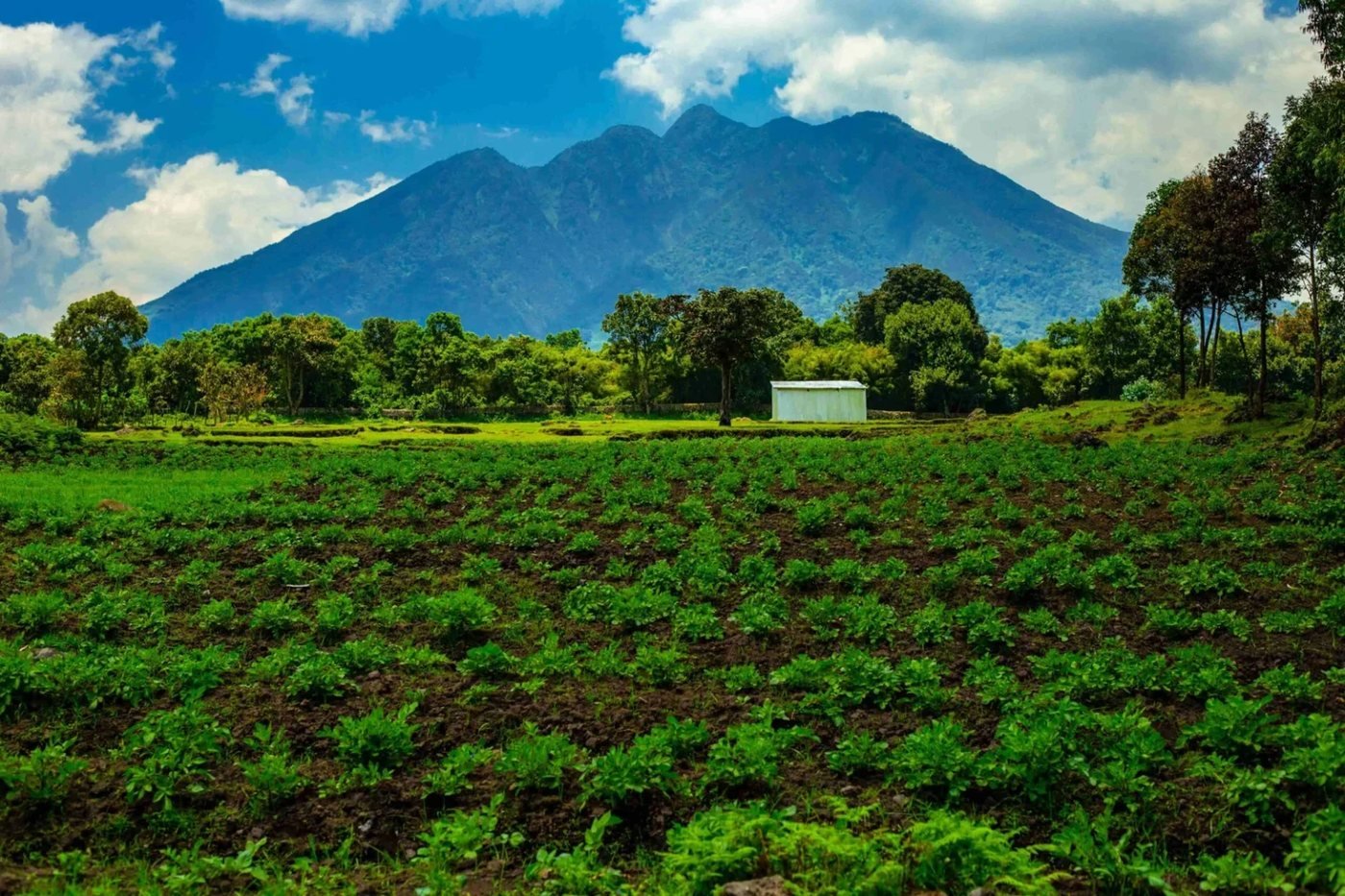
Rwanda’s volcanic slopes are more open and the gorilla families tend to range more predictably. Treks typically run 2 to 4 hours, with shorter options available for travelers with mobility concerns. The trails are better maintained. The experience is no less powerful — standing face to face with a silverback is the same wherever you are — but the journey to get there has a different character.
The Lodges and Infrastructure
Rwanda has invested heavily in tourism infrastructure. Several world-class luxury lodges sit within easy reach of Volcanoes National Park. Kigali is a genuinely impressive city: clean, organized, easy to navigate.
Uganda’s lodges near Bwindi range from comfortable mid-range to very good luxury — but they do not quite match Rwanda’s top-end properties. The roads to Bwindi are longer and more demanding, though the scenery through southwestern Uganda is spectacular. If the luxury of the full experience matters to you as much as the gorilla encounter itself, Rwanda wins on this dimension.
Combining Both in One Trip
Many of our most satisfied travelers do both. A 7 to 10-day itinerary that includes gorilla trekking in Uganda then crosses into Rwanda gives you the best of both worlds: Uganda’s rawness and value, Rwanda’s polish and Kigali’s energy, and the rare experience of seeing gorillas in two countries on one trip. The Cyanika or Katuna border crossings are straightforward, and the two countries sit close enough that the logistics are manageable. This is one of Bashem’s most-requested itineraries.
Which One Should You Choose?
1. What is your budget? If budget is genuinely a constraint, Uganda gives you the same gorilla experience for $700 less per person. That saving can fund additional days, better flights, or a Nile cruise at Murchison Falls.
2. How important is the luxury lodge experience? If you are planning a honeymoon or a once-in-a-decade trip where every detail matters, Rwanda’s infrastructure is built for you.
3. Do you want more than just gorillas? Uganda also has chimpanzees in Kibale Forest, the Nile at Murchison Falls, tree-climbing lions in Queen Elizabeth National Park, and a richness of wildlife Rwanda does not match. If you want a full East Africa wildlife trip built around gorillas but not limited to them, Uganda makes more sense as a base.
The One Thing Both Have in Common
You will sit in a forest, ten metres from a wild mountain gorilla, and you will feel something shift. People cry. Grown men go quiet. Even photographers put the camera down and just watch. There is something about the intelligence in a gorilla’s eyes, the way a baby clings to its mother, the casual authority of a silverback, that lands differently than any nature documentary prepares you for.
That moment is the same in Rwanda and Uganda. The trail to get there is different. The price is different. The lodges are different. But the moment itself — that one hour in the forest — is the reason people fly 14 hours to East Africa and call it the best thing they ever did.
We can help you plan it either way. Get in touch with Emmanuel here.
Frequently Asked Questions
Is Rwanda or Uganda better for gorilla trekking?
It depends on your priorities. Uganda is better value ($800 permit vs $1,500), has more gorilla families, and offers a wilder trek. Rwanda is better for luxury, shorter treks, and a more polished overall trip. Many travelers do both on a single 8-10 day itinerary.
Can you see gorillas in both Rwanda and Uganda on one trip?
Yes. A 7-10 day combined itinerary is very achievable. You trek in Uganda first, then cross into Rwanda for the second encounter plus Kigali. Bashem Safaris arranges these regularly.
Is gorilla trekking harder in Uganda than Rwanda?
Generally yes. Bwindi’s terrain is steeper and denser, and treks can run 4-8 hours versus Rwanda’s typical 2-4. Porters are available in both countries. Neither trek is impossible for a reasonably fit traveler.
How far apart are the gorilla trekking locations in Rwanda and Uganda?
Bwindi (Uganda) and Volcanoes National Park (Rwanda) are approximately 3-4 hours apart by road including the border crossing. A combined trip is entirely practical.
How far in advance should I book gorilla trekking permits?
Book 6-12 months ahead for peak season (June-September, December-February). Permits sell out. Bashem Safaris handles permit procurement for both countries — you do not need to contact the wildlife authorities yourself.
Do I need a visa for both Rwanda and Uganda?
Yes. Both require visas — most nationalities can apply online or get one on arrival. The East Africa Tourist Visa (Uganda + Kenya + Rwanda) is available to some nationalities and can save money on a multi-country trip. Ask us and we will point you to current requirements.