
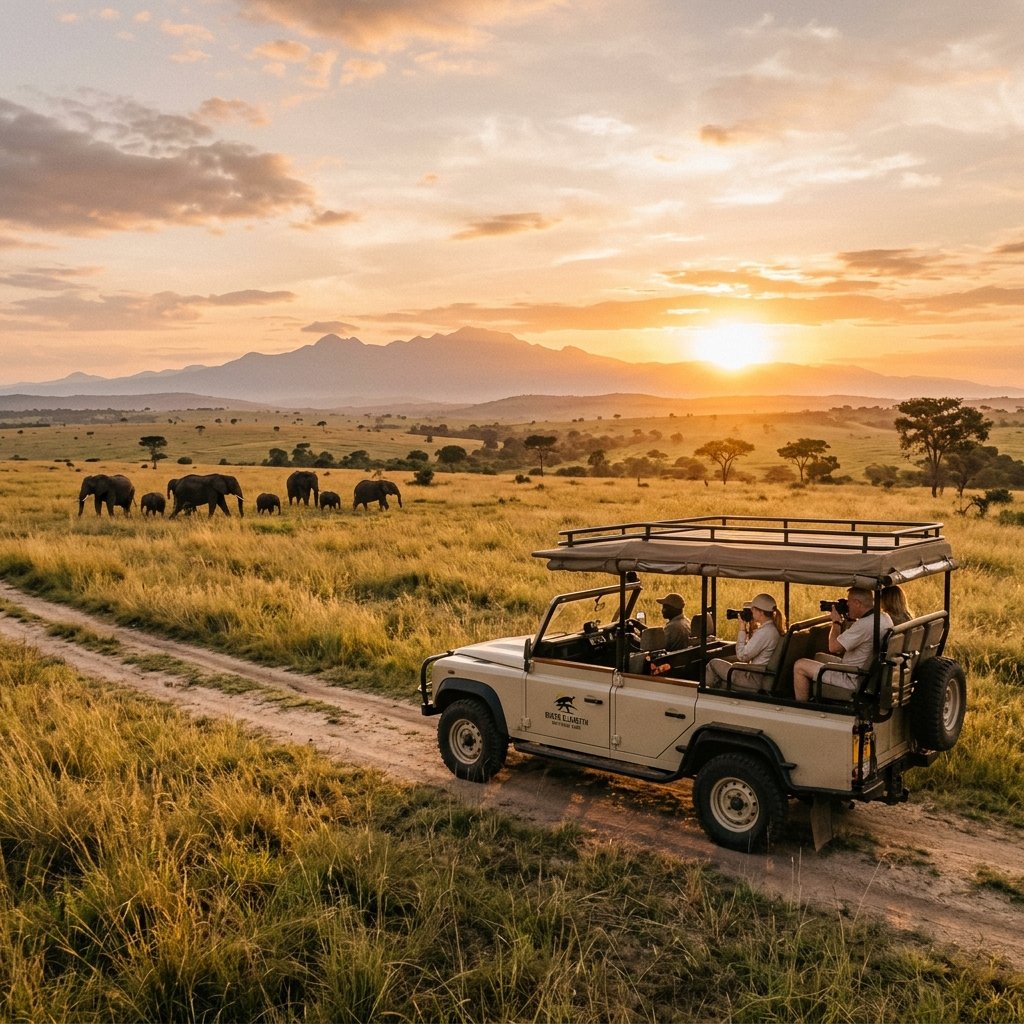
I have a friend in California named Robert. For seven years, Robert and I emailed back and forth. Every January, he would send me a message asking for a new quote. He would ask about the lodges, the flight schedules, and the best time of year to see the migration. And every February, he would send a second email with a heavy heart. He would say, “Emmanuel, it is just not the right time. We are saving for the house,” or “The kids have camp this summer,” or “Maybe next year when the market is better.”
Last year, Robert finally stepped off the plane in Entebbe. He was seven years older, his children were now in college instead of at home, and the trip cost him about twenty percent more than it would have in 2017. As we sat together on the final evening of his safari, he didn’t talk about the money. He looked at me and said, “I realized today that I didn’t save any money by waiting. I only lost seven years of stories.”
When people ask me, “is a safari worth the money,” they are usually thinking about the numbers in their bank account. But the real cost of a safari is not measured in dollars. It is measured in the moments you choose to postpone.
The Psychology of “One Day”
We all have a list of things we plan to do “one day.” We tell ourselves that there is a perfect time for adventure — a time when the mortgage is paid, the career is stable, and the world feels perfectly safe. But for most of us, that perfect time is a mirage that stays just out of reach.
The tragedy of the “one day” mindset is that it assumes we will always have the same energy, the same health, and the same opportunities. I have seen many travelers wait until they are in their seventies to book their dream safari, only to find that their bodies can no longer handle the trek to see the gorillas. They still have the money, but they have lost the physical window of opportunity.
When you wait, you are not just saving money. You are paying with your most precious and non-renewable resource: your time. A safari is an investment in your soul, and the earlier you make that investment, the longer you get to enjoy the dividends of the memories you create.
Beyond the Price Tag: What You are Actually Buying
If you look at a safari as a collection of hotels and car rides, the price can feel high. But at Bashem Safaris, we believe the safari is not the product. The transformation is the product.
When you book a trip with us, you are buying a departure from the noise of your daily life. You are buying the silence of the savanna at dawn, where the only sound is the rhythm of your own breathing. You are buying the moment of pure, unfiltered connection when you look into the eyes of a mountain gorilla and realize that we are all part of the same beautiful, fragile story.
These moments don’t have a market value because they are priceless. You cannot buy a “moment of awe” at a department store. You have to go out into the world and find it. When you consider if the trip is worth the money, ask yourself what it is worth to feel truly, deeply alive again.
The Real Cost of Postponing
There is a financial reality to waiting that many people overlook. In the world of high-end travel, prices rarely go down. Gorilla permits in Uganda were six hundred dollars a few years ago; today they are eight hundred. The cost of conservation, the price of fuel, and the operations of luxury lodges all trend upward.
But the financial cost is small compared to the emotional cost. Think about the version of yourself that exists today. You have a specific set of dreams and a specific way of seeing the world. If you wait five years, you will be a different person. You might still go on the safari, but you will experience it through a different lens.
I think about the families who travel with us. A safari with a twelve-year-old child is a completely different experience than a safari with a twenty-two-year-old. Both are beautiful, but the window to see the world through your child’s young eyes is very short. Once it closes, it never opens again. That is a cost that no amount of savings can ever repay.
Investing in Your Personal Mythology
We all live by the stories we tell about ourselves. For many of our North American guests, their daily story is one of responsibility, hard work, and routine. It is a good story, but it can become a heavy one.
A safari gives you a new chapter for your personal mythology. It gives you the story of the time you were brave enough to fly across the world. It gives you the story of the morning you watched a lioness hunt in the tall grass. It gives you the story of the village elder who shared a cup of tea and a laugh with you, despite having lived completely different lives.
These stories become a part of who you are. They are the things you talk about at dinner parties, the things you think about when you are having a stressful day at the office, and the things you will remember when you are old. When you ask if is a safari worth the money, you are really asking if your own story is worth the investment. I believe the answer is always yes.
The “Value” of Ethical Travel
One of the reasons a high-quality safari costs what it does is because of the impact it has on the ground. At Bashem Safaris, we are very transparent about where your money goes. A significant portion of your trip cost goes directly into conservation and community support.
Your visit pays the salaries of the rangers who protect the gorillas from poachers. It funds the clinics that provide healthcare to the villages on the edge of the forest. It pays for the clean water projects that we support through our Giving Back initiatives.
When you choose to go now instead of waiting, you are providing immediate support to these vital projects. You are becoming a partner in the survival of a species and the empowerment of a community. That sense of purpose adds a layer of value to your trip that you simply cannot find in a traditional luxury vacation.
Addressing the “Budget” Fear
I understand that for many of our guests, ten thousand dollars is a significant amount of money. It represents months or years of hard work. I want you to know that we respect that. We don’t want you to spend your money carelessly.
That is why we focus so much on the “Planner” stage of the journey. We help you understand exactly where every dollar goes. We help you choose the lodges that offer the best value for your specific style. We help you decide between a fly-in safari and a drive-in safari based on your priorities.
We want you to feel that every cent you spend is working for you. Our goal is to ensure that when you return home, you don’t look at your bank statement with regret. You look at your photos with gratitude. You can see how we break down these options on our Destinations page.
The Regret of the “One Who Didn’t Go”
In all my years of running Bashem Safaris, I have had many people tell me they regret the timing of their trip. But their regret is always the same. They say, “Emmanuel, I wish I had done this ten years ago.”
I have never, not even once, had a guest come back from a safari and say, “I wish I had kept that money in my savings account instead.”
The experience of the wild has a way of putting our financial concerns into perspective. When you are standing in the middle of the Serengeti, watching the sun rise over an infinite horizon, the numbers on a spreadsheet feel very small. You realize that you are part of something much larger and much older than any economy.
Breaking the Cycle of Procrastination
So, how do you move from “meaning to go” to actually going? It starts with a shift in how you value your own experiences. It starts with recognizing that your “someday” needs to have a date on the calendar.
You don’t have to book the whole trip today. You just have to start the conversation. You have to move from the abstract dream to the concrete plan. Once you have a plan, the path becomes clear, and the fear of the cost begins to transform into the excitement of the journey.
I often suggest that people take our Safari Quiz as a first step. It is a low-pressure way to see what is possible. It moves the idea of a safari from a “big, expensive mystery” to a “personalized, achievable plan.”
A Servant’s Heart in Your Planning
My team and I are here to serve you. We are not here to push you into a trip that you cannot afford. We are here to help you navigate the choices so that you can make the investment with complete confidence.
We treat your money with the same respect that we treat our own. We look for the best experiences, the most ethical partners, and the most meaningful moments. We want you to feel that you have a trusted friend in Uganda who is looking out for your best interests.
If you have questions about the logistics or the timing, please reach out through our Contact Us page. We are happy to talk through your specific situation and help you find the right window for your adventure.
The Choice is Yours
The year 2025 is coming whether you go on a safari or not. You can spend that year in the same routine, doing the same things, and looking at the same walls. Or you can spend it preparing for the most significant journey of your life.
The cost of the trip will be forgotten in a few years. But the feeling of the African wind on your face and the sight of a mountain gorilla in the mist will stay with you forever.
Don’t wait for the “perfect” time. It doesn’t exist. There is only right now, and right now is the most valuable time you have.
Are you ready to stop meaning to go and start planning to go?
Take the 60-Second Safari Quiz
I hope to see you on the other side of the world very soon.
Emmanuel Bashitsi
Founder, Bashem Safaris
Frequently Asked Questions
How much does a Uganda gorilla trekking safari cost in total?
A Uganda gorilla trekking permit is $800 per person (paid to Uganda Wildlife Authority). A complete safari package — including transport from Entebbe, lodging, gorilla permit, guide, and park fees — typically ranges from $3,000–$7,000 per person depending on duration (5–12 days) and accommodation level (budget lodge vs. luxury tented camp). International flights from North America are additional ($900–$1,500 round trip from major hubs).
Why does a gorilla trekking permit cost $800?
Uganda Wildlife Authority sets the permit price to fund gorilla conservation, ranger salaries, anti-poaching operations, and community benefit programs in the villages surrounding Bwindi. A portion goes directly to local communities. The price has increased over time as the mountain gorilla population has grown — from 620 in 1989 to over 1,063 today — demonstrating that conservation investment works.
Is it worth going on safari if I’m on a budget?
Yes, but plan realistically. Budget safaris exist — staying in mid-range lodges, traveling in shoulder season (March–May or October–November), and combining destinations efficiently can bring total costs down. What you cannot budget around is the gorilla permit itself ($800 in Uganda, $1,500 in Rwanda) — that is a fixed cost. If $800 is a genuine stretch, start with a Kenya or Tanzania wildlife safari (no gorilla permit required) and save the gorilla trek for a later trip.
How far in advance do I need to book a gorilla trekking safari?
For peak months (June–September, December–February): book 9–12 months in advance. Gorilla permits are limited to 8 visitors per family group per day, and popular gorilla families sell out a year ahead. For shoulder months: 4–6 months advance booking is often sufficient. Waiting until 2–3 months out for a peak-season trip is the single biggest booking mistake travelers make.
What is included in a Bashem Safaris package?
A typical Bashem Safaris package includes: Uganda Wildlife Authority gorilla trekking permit, ground transport from Entebbe airport, all accommodation (specified in your itinerary), full-time guide (Emmanuel or his trained team), national park entry fees, ranger fees, airport transfers, and 24/7 support. Excluded: international flights, travel insurance, personal spending, tips, and optional activities (chimp tracking, boat cruises, cultural visits).
Will gorilla permit prices go up in the future?
Almost certainly. Uganda increased its permit price from $600 to $700 in 2016, then to $800 in 2020. Rwanda increased its permit from $750 to $1,500 in 2017. Both countries have signaled that prices will continue rising as gorilla tourism demand grows and conservation costs increase. Booking sooner locks in current pricing.