Bashem Safaris · A Guide for the Dreamer
Was It
Worth It?
Real answers from people who almost talked themselves out of going
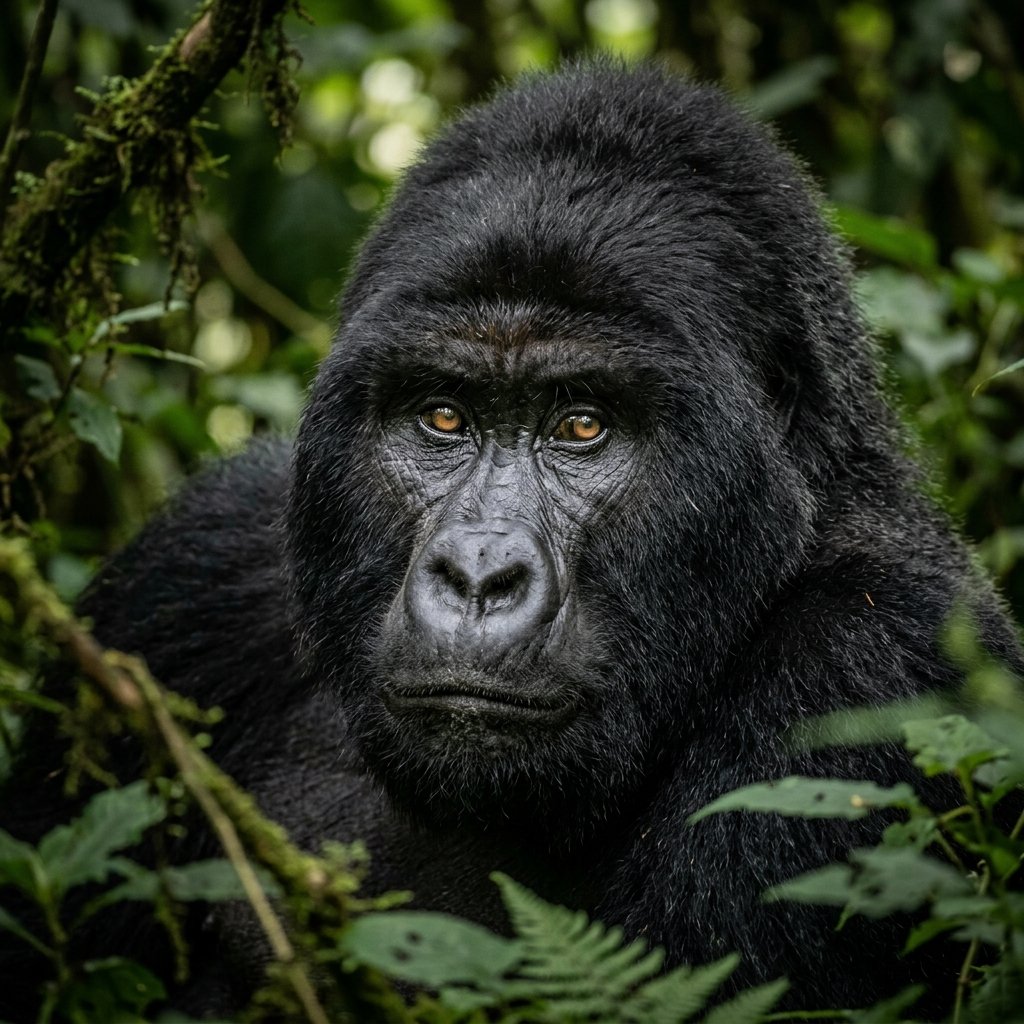
Every week — without fail — someone emails me some version of the same question.
Sometimes it is direct: “Is gorilla trekking actually worth $800?”
Sometimes it arrives wrapped in practical language: “We’re trying to decide if Uganda fits our budget.”
And sometimes it arrives late at night, the way the real questions always do: “My husband thinks this is too much money for one hour with gorillas. Am I being naive?”
I have read thousands of these emails over the years. And I want to give you the answer I give them — not the sales pitch, not the trip advisor version, but the honest one from someone who has watched ordinary people walk into Bwindi Impenetrable Forest nervous and come out changed.
First, let me name what you’re actually afraid of.
You are not really afraid of gorillas. You are afraid of spending $8,000 or $12,000 or $15,000 on something that turns out to be — fine. Good. A nice trip.
You are afraid your spouse will look at the bank statement in January and think: we could have bought a car.
You are afraid you will stand there in the forest and feel nothing, and you won’t be able to tell anyone, because how do you admit that?
That fear is real. And it deserves a real answer.
Martha, 68. Bad knee. Suburban New York.
Martha emailed me before she booked. Her question was practical at first — she wanted to know about the terrain, whether her knee would hold up, whether there was a porter.
But the question underneath was the real one. She wrote: “Emmanuel, am I too old and too ordinary for this?”
I get some version of this question more often than you might think. Not always from people who are 68. Sometimes from people who are 45 and feel like they missed the window. Sometimes from solo travelers who are afraid they will be the only one who does not know what they are doing.
What I told Martha is what I would tell you: Bwindi does not care who you are. It cares that you showed up.
She trekked for hours through steep forest. She used a porter for support on the difficult sections — a young man from Kisoro named David. She tipped him more than she had planned.
She spent the full hour with the gorilla family. When it was over, she could not immediately speak.
“I keep trying to describe it to people and I can’t. That’s how I know.”
The person who builds the spreadsheet.
I have planned safaris for people who arrive with research. The Uganda permit is $800. Rwanda’s is $1,500. They have done the math fifteen different ways.
I respect that. And I try to answer it honestly — which is why I wrote the budget guide that goes alongside this one.
But there is something that does not show up in a spreadsheet. The moment that changes people is rarely the one they planned for.
It is usually something smaller: the tracker who found the gorilla family at dawn by reading the forest the way most people read a text message. The porter who kept pace for four hours without complaint, then said something encouraging at exactly the right moment. The village on the drive back, and the children who wave.
I have watched careful planners — people who came to East Africa with color-coded itineraries — go quiet in the forest and come back different. Not because the gorillas were bigger than expected. Because something else happened that no itinerary could have scheduled.
The person who is afraid they’re not the type.
Some people email me because they feel like safari travelers are a certain kind of person — athletic, adventurous, seasoned — and they are not sure they are that person.
Here is what eleven years of planning these trips has taught me: the people who worry most about not belonging are almost always the ones who feel it most deeply when they arrive.
The fear is usually a sign of how much it matters to you.
I have sent people in their late 60s and early 70s on gorilla treks. I have planned trips for solo travelers who had never traveled internationally before. I have worked with couples where one person was enthusiastic and the other was quietly terrified.
In almost every case: the person who was most afraid came back the most changed.
The person who almost didn’t come.
Robert from California came to me looking for advice. He had been thinking about this trip for seven years. Every year he would look at prices, request a quote, tell himself the timing was not right.
What happened over those seven years? Prices went up. His window of good health — the kind where a four-hour gorilla trek is possible — got a little shorter.
He eventually went. He told me afterward it was the best investment he had ever made.
The memory was real. The experience was real. The seven years of waiting were the only thing that cost him something he did not get back.
“The people who almost didn’t go don’t say it was worth it. That’s too small. They say: I didn’t know I needed that.”
A word about the money.
The Uganda gorilla trekking permit is $800 USD for international visitors. That number feels abstract until you understand where it goes.
The Uganda Wildlife Authority allocates 20% of its total annual park revenue to surrounding communities — funding schools, healthcare facilities, and infrastructure in the villages that border Bwindi. An additional $10 from each gorilla permit goes directly to the Community Revenue Sharing Program for frontline communities.
The mountain gorilla population has grown from 620 in 1989 to over 1,063 today. That recovery happened because of this model — tourism revenue giving communities a reason to protect the forest instead of clear it.
When you spend $800 on a permit, you are not only buying an experience. You are participating in the system that keeps these animals alive.
The trip of your life is usually the one you almost talked yourself out of.
I would love to help you figure out if this is the right trip for you — not to sell you anything, but to give you an honest answer. Take the quiz and I will tell you exactly what I think.
Take the Quiz Email Emmanuel